
Prologue: Over the past year, I’ve had the opportunity to interview several baseball players who played in the 1950s/60s, and pitchers have been my favorite to listen to. The beauty and elegance when they describe how the ball behaves and moves through each play boosts my imagination. It feels like a transcendence into a world that breaks free of the limitations of gravity, physics, and geometry. I envision streams of bright, kinetic energy transferring from their body through their arm and into the ball when they describe throwing their signature curve or fastball. Left with awe and wonder, I feel like I have just been invited to a secret world beyond my usual understanding.
Today, I will share the stories of Dr. Sherman Cottingham, an African-American pitcher who played with the Kansas City Monarchs, Satchel Paige’s All-Stars, and the North Battleford Beavers in the 1960s
Player Profile: Dr. Sherman Cottingham

At eight years old in the early 1940s, a poor kid with no shoes, Sherman is standing by a pool of water in the back woods of Louisiana. He picks up a stone and throws it overhanded into the water- plunk, it hits the water and sinks immediately to the bottom. He’s seen it done before, but how can Sherman get the rock to bounce across the surface? With his eyes on the ground, he sifts through the various sizes with his fingers, feeling the different textures and shapes. His eyes focus on a flat, smooth, and oval-shaped rock. That’s the one.
He knows it’s vital to hold the stone properly to achieve success. Proper pressure is combined with grasping the stone between the thumb and forefinger. To get the rock to bounce on the surface, Sherman must angle his wrist just the right way to flick forward, and in its release, the stone spins horizontally. It meets the water and skips beautifully on its surface. Success! This is the beginning of Sherman’s love of baseball.
Having an understanding and curiosity, he was drawn to join a ball team in middle school, and after he graduated high school, he pursued a degree in education. During the summers, when he was off from teaching, he continued to play as a freelance pitcher on local teams. Sherman also played for the Kansas City Monarchs in their final two years of the American Negro League in 1961 & 1962.
It was the great Satchel Paige who noticed Sherman and asked him to play for his All-Star team in 1963. Satchel and Sherman became close, and Satch would call him little professor. So close in fact that the media thought he was Paige’s son, and many newspaper articles refer to Cottingham as Satchel Paige Jr.

In the 1960s, Cottingham mastered the low 90-mile fastballs and a great slider. He remembers Paige as a wonderful mentor and teacher to help improve his pitching:
Before one of our games, Paige was warming up before going in the game to pitch. As he was throwing, I was watching the movement of his fastball. The ball appeared to move into a right-handed batter and away from a left-handed batter. I asked him if he would teach me how to throw that pitch. He later did, and I used it for the remainder of my career.
During their barnstorming tour, Cottingham traveled to Saskatchewan, where he was pulled aside by Ken Nelson and asked to play with the North Battleford Beavers. He only had a one-season contract with Paige’s All-Stars, so he took Nelson up on the offer. Cottingham played two seasons (1964 & 65) and described his time in Canada as enjoyable and pleasurable. The Beavers were the first time he had played on an integrated team, and the skills he learned working with his white teammates carried through in his role as a teacher.
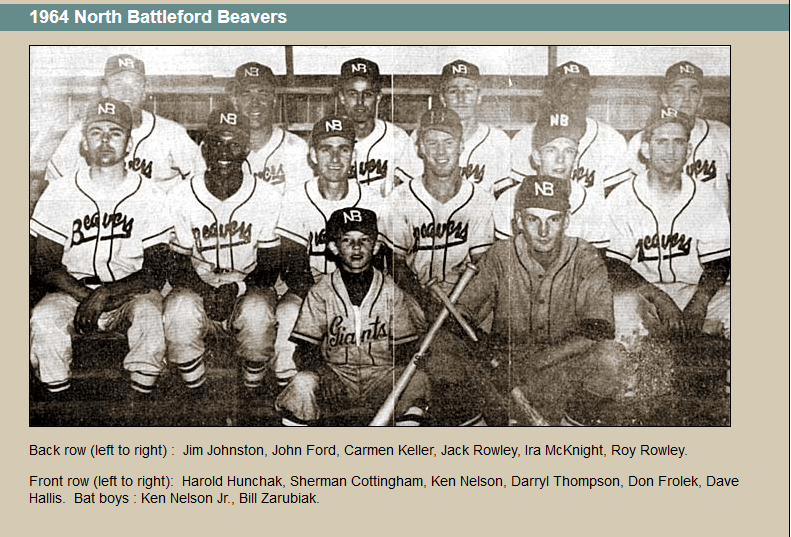
Cottingham was born into and living through the Jim Crow era in the United States. He recounts a story where he had to describe the racial climate at a party in North Battleford.
He was chatting with a young lady and said, If we were in Louisiana, I would not be privileged to sit and engage in a social conversation with you. She asked, Why? I responded, Because you are white, and I am black.
His memories of North Battleford are filled with fun times of travel, exploration, and friendship. His fellow players ensured his time in Saskatchewan was full of activities, so he didn’t feel left out. He was constantly invited to play pool, suppers, and trips to the local beach. He and fellow teammate John Ford, who was also a high school teacher, planned a basketball camp for the local kids:
I had a magnificent and terrific relationship with him. As I recall, we held a basketball workshop for some of the students in North Battlefield. He showed me some of the skills he developed while playing basketball. But it was in baseball that I observed his greatest of athletic skills and enjoyed playing baseball with him.
There are times, Cottingham shares, that racism has its way of crawling from under the logs and coming out of the sewage lines with evil intentions. He was eating breakfast at a North Battleford restaurant, minding his own business, when a man approached him and called him the n-word. The restaurant owner, with whom Cottingham had become friends, asked this man to leave the establishment immediately and apologized for this person’s behaviour. Cottingham was unfazed and said, As long as he didn’t touch me, I could deal with that kind of negative behaviour.
Overall, the faith built through his time with the Beavers helped Cottingham understand that all people can’t be judged as one and that there are good-quality people who can be trusted.
Cottingham reflects on some highlights of his career in Saskatchewan, such as the no-hitter he pitched and the MVP he received in 1965. Sherman recalls his cheering section of female fans, and his teammates would tease him and ask how much he was paying them. But he felt genuine admiration from the crowds, and if he heard anything remotely negative, it was “Come on, Sherman, strike him out.”
After his last year in North Battleford, Cottingham returned to university for his Masters and PhD. As much as he enjoyed baseball, he valued his education above everything else, and he knew that any long-term success would come from his teaching career.
Cottingham hopes to return to North Battleford soon. My interview with him has rekindled many warm memories, and he would like to revisit the place that taught him so much and the people who were so kind and generous.
Update (July 2024):
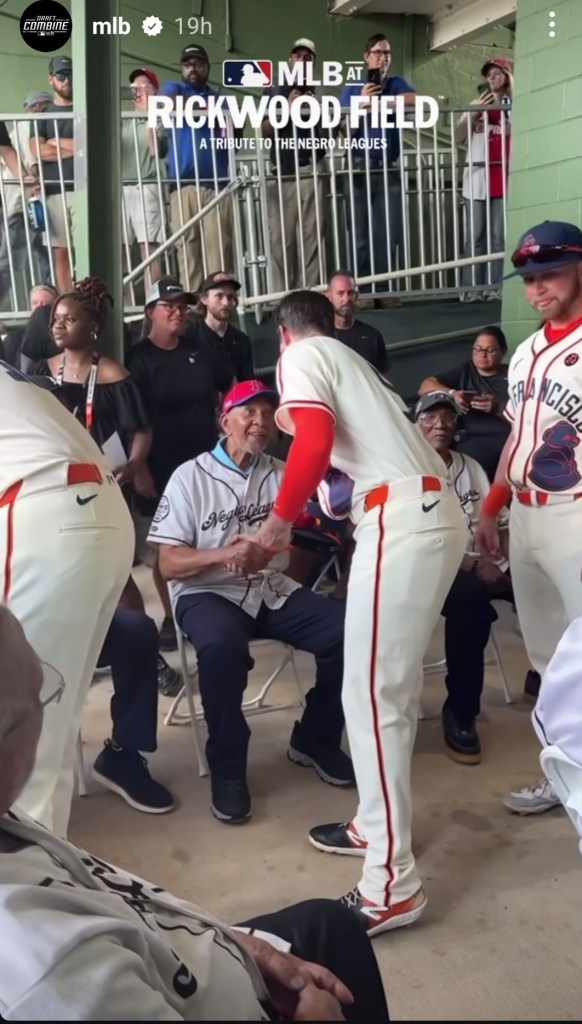
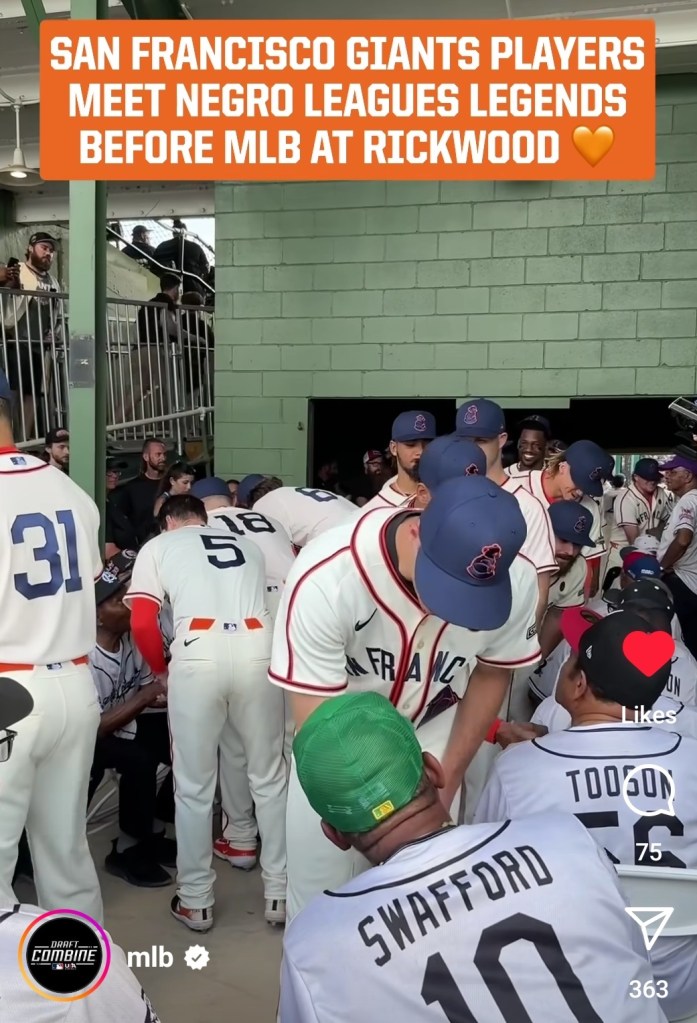
I was so happy to hear from Dr. Cottingham in May. He shared the great news that he and other Negro League players were to be honoured at the Rickwood Classic (Birmingham, Alabama) in June! Jay-Dell Mah and I played eye-spy during the event and found another Negro Leaguer that played in the Manitoba-Dakota (Man-Dak) League: Ron Teasley! Western Canada was well represented. Congratulations on your special day.
Sources:
Destiny: A Matter of Choice not Chance by Dr. Sherman Cottingham
Interview with Dr. Sherman Cottingham by Robyn Jensen -September 10, 2023
Regina Leader-Post
Star Phoenix
Attheplate.com

 Home Runs & Dirt Roads
I have just learned that Cottingham is from my town, Farmerville, Louisiana. It is such a marvelous revelation to know he has achieved such admirable greatness. I work with the local museum and would like to include him in our exhibits. The museum can be reached at 318-982-8020
LikeLike
Hi Jean, Thanks for reaching out! He is a wonderful man. I will forward your contact information to his family.
LikeLike