
When wearing my Indian Head Museum Vice-President hat and thinking of ways to celebrate and share the story of The Rockets’ 75th Anniversary in 2025, I asked myself: why? Why even celebrate it at all? What is so important that I need to keep telling their story?
The answer, for me, was time. Events connected to The Rockets happened 75 years ago. The people who played and watched baseball in the 1950s and interacted with our All-Black baseball team will not be here in 5 to 10 years. The opportunity to hear firsthand accounts, to listen to the voices that cheered from the stands or sat in the dugout, is slipping away.
Most of what we know about Saskatchewan’s baseball history exists in newspapers. At best, these articles provide fragments—box scores, game summaries, and the occasional player highlight. However, what’s missing are the lived experiences —the small but meaningful moments that made baseball the epicenter of summer social engagement in the 1950s. The real story of the Indian Head Rockets—their struggles, friendships, and impact on the communities where they played—is largely absent from the historical record.
Newspapers captured the statistics, but couldn’t capture the feeling of a hot summer day sitting on the bleachers, the sound of a bat cracking against the ball, eating the pie made by the local ladies’ auxiliary, or the quiet conversations between young fans and the players they idolized. That’s where baseball cards come in—not just as collectibles, but as vessels of memory, preserving the knowledge that once passed from players to bat boys, from grandparents to grandchildren, and from fans to the next generation.
This set is more than just a tribute; it is the result of in-depth research and personal conversations with those who lived through this history. I spoke with family members, the last two living Rockets—Nat Bates and Willie Reed, children of the committee members who founded the team—and historians who have dedicated themselves to preserving this legacy. These cards are based on real stories, accurate details, and genuine experiences, ensuring that when history comes into the hands of kids, fans, and historians alike, the transmission of knowledge is immediate and authentic.
Each card was carefully crafted not just to capture statistics but to bring these stories back to life. The accuracy of uniforms, equipment, and even the most minor details—such as the correct depiction of a catcher’s mitt—matters because they make these cards a bridge between the past and the present. When young fans hold these cards in their hands, they won’t just be looking at players from the past—they’ll be holding the spirit of the game as it was played, remembered, and passed down.
Baseball Card Player Lou Green: The Catcher Who Never Stayed Quiet
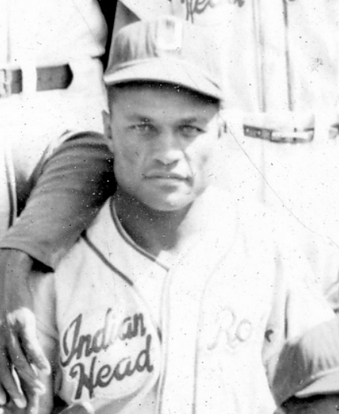
Lou Green’s story, like so many of the Indian Head Rockets, is one of perseverance and quiet excellence—except, of course, when he was on the field. A skilled catcher, Green played with The Rockets in 1950, handling the team’s talented and diverse pitching staff. His position behind the plate made him both the defensive backbone and a strategist, calling pitches and keeping the team steady under pressure.
But if there was one thing Lou Green was known for, it was his chatter. In baseball, a catcher’s voice is as much a part of the game as a bat or a glove. Green had a non-stop stream of encouragement, taunts, and playful jabs that kept his pitchers focused and got under the skin of opposing batters. “You couldn’t step into the box without hearing Lou; he was always talking, always in the game”, recalls baseball researcher and historian Rich Necker.
His chatter wasn’t just noise—it was strategy. He could hype up his team in a tight spot, keep a young pitcher calm on the mound, and distract an opposing hitter just enough to make them second-guess their swing. His voice was the pulse of the game, calling out pitches, adjusting defenses, and keeping everyone engaged. If the diamond was quiet, it wasn’t for long—Green was there, making sure everyone stayed sharp.
Catching was no easy task in the 1950s. It was a grueling position that required endurance, quick reflexes, and the ability to read the game in ways few others on the field had to. The catcher was often the player who saw everything—the way a batter shifted his weight, the way a pitcher’s arm slot dropped slightly as he tired. Green had to know all of it, and he did.
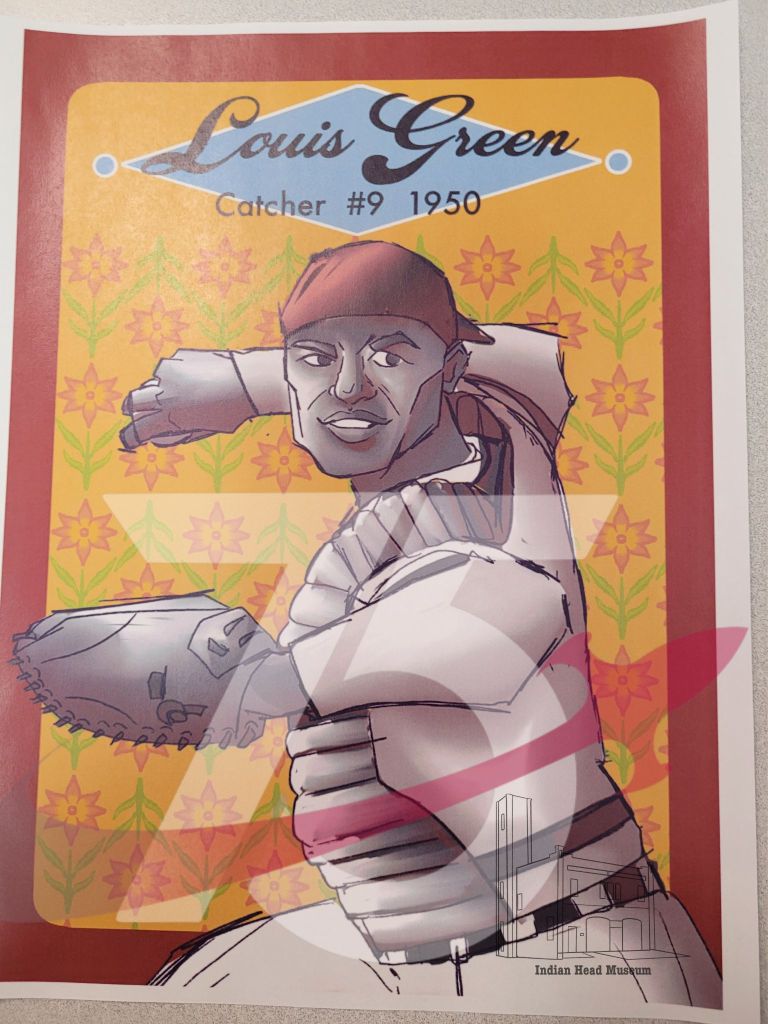
Designed and Created by Malena (Max) Jensen
Beyond the technical side of the game, Green played at a time when Black players still faced discrimination and segregation during the Jim Crow era. The Rockets, as a team mainly composed of Black and Latino players, were often celebrated for their skill but still had to navigate the social and racial challenges of the era. Being a catcher meant more than just controlling the game—it meant holding the team together, keeping morale high, and proving, game after game, that the Rockets belonged on any field they stepped onto.
Lou Green’s role was more than just statistics and box scores. He was part of something bigger—an era of baseball that is now fading from living memory but remains a pivotal chapter in Saskatchewan’s baseball history. His voice, both in spirit and in sound, was impossible to ignore, and that’s precisely how he wanted it.
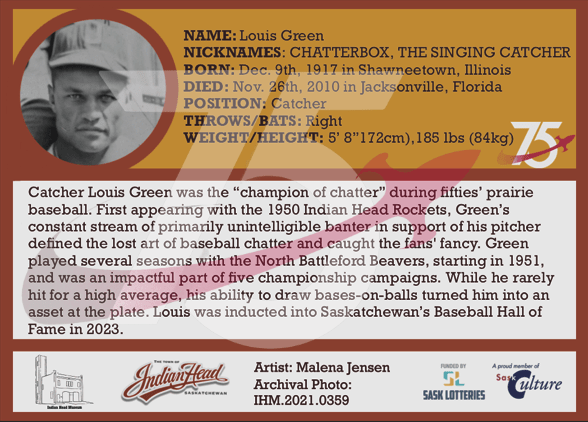
Designed and Created by Malena (Max) Jensen
Acknowledgments
This project wouldn’t have been possible without the dedication and research of many individuals. A special thank you to the historians and researchers at attheplate.com, including Rich Necker and Jay-Dell Mah, as well as 2024 Indian Head Museum summer student Trisha Sibayan, for their commitment to preserving The Rockets’ history. Thank you to family members Leone Farrell (daughter of Jimmy Robison) and Jodi Gendron (daughter of Ken McCabe). I sincerely appreciate Nat Bates and Willie Reed for their invaluable firsthand accounts.
This project also owes its visual storytelling to Artist, Designer, and Creator Malena (Max) Jensen, whose attention to historical accuracy ensured that every card captures the details that matter. Thanks to Scot’s Printing, our local printing partner, for bringing this collection to life.
These baseball cards are more than memorabilia. They are a testament to the power of storytelling, a tribute to the Indian Head Rockets’ legacy, and a bridge between past and present. Available for purchase starting in June 2025, this collection ensures that the Rockets’ history continues to be shared, remembered, and celebrated—one card at a time.
Post Article Comment
“Excellent report on Louie Green and his abilities as a catcher (teammate) and leader of our baseball team. As my role as the backup catcher to Louie we never failed to share the experience that he had gained on opposing hitters as we prepared for each ballgame. I always appreciated his knowledge and help. Many thanks to my friend Louie.” – Gale Tuggle, Catcher/Outfield – 1956 & 57 North Battleford Beavers, 1957 Global World Series, & 1961 Saskatoon Commodores


Outstanding job on the baseball cards! I will certainly be purchasing a set. A wealth of local history. Well done to everyone you mention in your acknowledgements. Well done Malena Jensen for the design and execution of the cards.
LikeLike